
March 30 2026 6PM | Skylight Room | GRADUATE CENTER CUNY 365 FIFTH AVE
Followed by a Q&A with author
“With a sober, precise, and tender style, the author offers us a book about fatherhood, biracial identity, and Blackness—but above all about the effort to reconstruct an identity shattered by the diaspora.” — Kalaf Epalanga
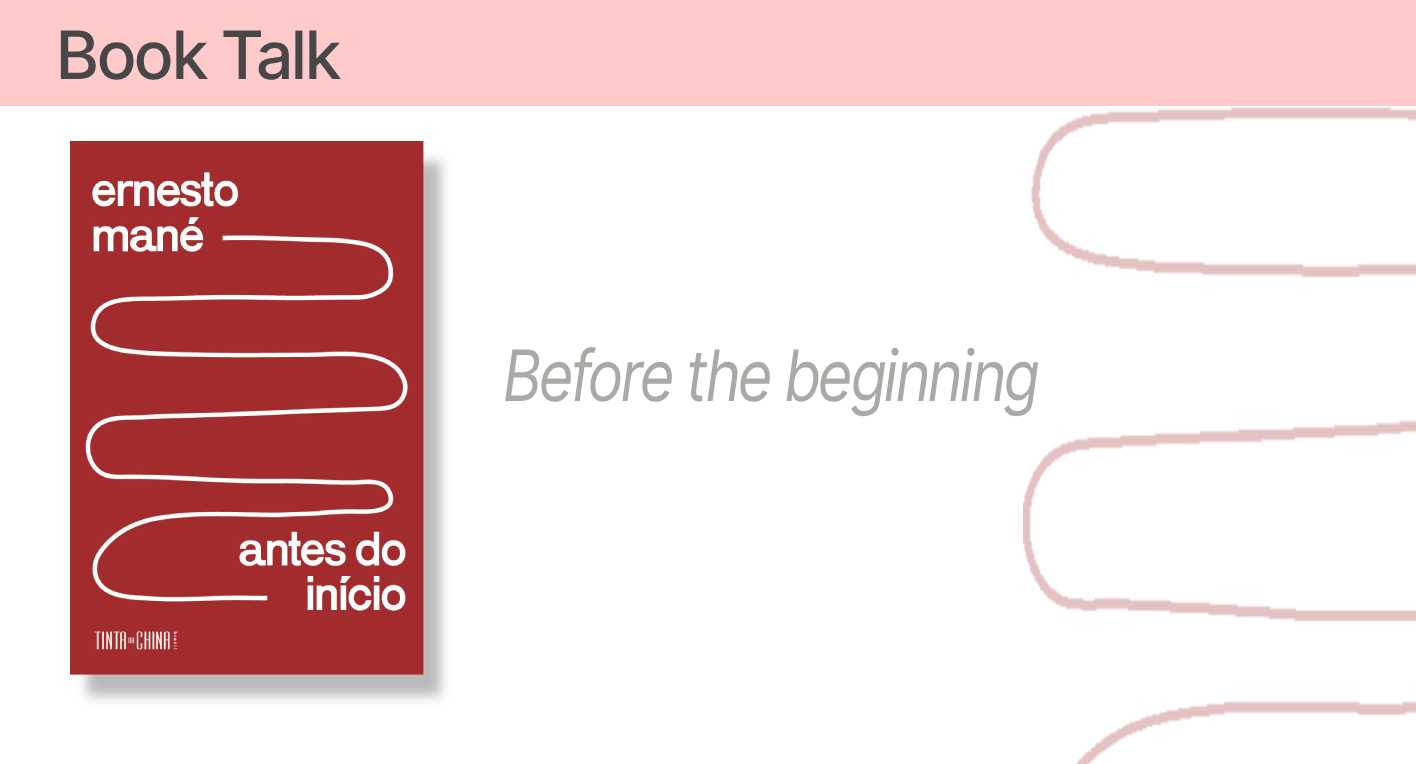
In 2010, the physicist Ernesto Mané, from the Brazilian state of Paraíba, embarks on a geographical and emotional journey to fulfill a long-held desire: to meet his paternal family in Guinea-Bissau. He emerges from those months profoundly transformed. Fifteen years later, now a career diplomat and a Guinean citizen, he gives literary form to his travel diary in Before the Beginning, published by Tinta-da-China Brasil. In the words of Angolan writer and curator Kalaf Epalanga, who penned the book’s flap text, the work is a “rare achievement,” in which “the great African tragedy is narrated in the same register as authors such as Ta-Nehisi Coates or Mia Couto.”
Staying in an aunt’s house in Bissau, the narrator sharpens his listening in order to learn from the traditions and beliefs of his grandparents, uncles, siblings, cousins, and nephews, weaving himself into their everyday lives. He travels inland to visit his grandparents, who live in precarious conditions in a bolanha, a rice plantation. The future diplomat acts as a mediator in his family’s conflicts, marked by the abandonment of a father who is never physically present, yet seems always to be there.
The tone moves from optimism about the country’s cultural and political potential to disillusionment with the tragic fate of post-colonial Africa. Mané often feels powerless. To his surprise, on the streets of Bissau he is treated as white for the first time, because of the way he dresses, speaks, and behaves.
After the journey—moving between laboratories, academic centers, diplomatic postings, and airports around the world—Mané works through his responses to the old racism preserved in childhood memories. In an effort to resist this historical violence and reconstruct an identity fractured by the twentieth-century African diaspora, the son draws closer to the father. Among the decisions made during the trip is the request for dual Guinean and Brazilian citizenship.
The most intimate questions unfold into philosophical and universal reflections as the author asks himself who he is, where he comes from, where he is going—and where one goes as a Black body in the world. In a sober and sensitive prose that moves naturally between travel diary, memoir, and essay, Mané searches for his own “t = 0,” physics’ zero time, in order to found a space of belonging and reconciliation.

