
Current Fellows
- Amalia Torrecillas
LDP fellow 2026
- Caitlin Kelleher-Montero
Reportage fellow 2026
- Cathy Cabrera Figueroa
Reportage fellow 2026
- Luis Banegas
Reportage fellow 2026
- Maurizio Guerrero
Reportage fellow 2026
Previous Fellows
2013 2014 2015 2016 2017 2018 2019 2020 2021 2022 2023 2024 2025
- Abigail Lapin
My project studies how space and art embody religious imagery to become signs of resistance against government repression and dominant inequalities, forming an Afro-Brazilian ethno-religious identity through the visual arts and architecture. Thanks in part to CLACLS’s travel fellowship, I traveled to Brazil for a month and explored the history and work of artists active in the civil rights movement from the 1950s through 1990s. In São Paulo, Rio de Janeiro, and Salvador da Bahia, I visited archival depositories, and interviewed artists, curators and scholars. During this trip, I discovered several organizations founded by artists to fight anti-racism, all of which remain overlooked. This research trip was vital to confirm the viability of my dissertation project and to help me prepare for my proposal.
- Aihui Wei
LDP fellow 2025
- Ana Cristina Perry
My project focuses on New York based artist Raphael Montañez Ortiz. Born in 1934, Ortiz was part of an international group of artists such as Argentine Kenneth Kemble and London based Gustav Metzger who conceptualized destruction in art as a means to address violence in life. My dissertation will examine how Ortiz intersects with other artists who worked in the United States to decry the ways in which art is often removed from its historical conditions and social struggles and sought to reinsert it into the lives of those within local communities. I consider his destruction performances alongside other performative and participatory projects that took place in alternative art spaces in New York in the 1960s such as Manipulations at Judson Church in 1967. Furthermore, my project investigates Ortiz’s role as an activist with the Art Worker’s Coalition and founder of El Museo to demonstrate the intersections of his political actions with his performed destructions. Thanks to the CLACLS travel fellowship, I will be able to visit Raphael Montañez Ortiz’s archives at the UCLA Chicano Studies Research Center in Los Angeles.
- Ana Maria Granados
Reportage Fellow 2024
Ana María Granados Romero is a second-year PhD student in the Latin American, Iberian, and Latino Cultures program at the Graduate Center. She holds a BA in Philosophy from the Universidad Nacional de Colombia and an MA in Anthropology from the Universidad de los Andes. Her research primarily focuses on narratives of
counterinsurgency and national security, particularly in the context of the drug war
in Colombia and Mexico. She currently teaches at Lehman College. - Anarrubenia Capellin Ortega
Thanks to the CLACLS funding I received I was able to travel to Honduras over the summer. I plan to conduct my research in the Maya site of Copan, in the western part of the country.Unfortunately, due to COVID-19 I was not able to conduct any fieldwork over the summer. Instead, I have used this time to start creating relationships with the pertinent authorities and will be conducting archival research of other archaeological projects in Copan and in other parts of the country over the next month, as public offices start to open back up. The project remains largely unchanged, but I believe the archival research will give me a better sense of the other players in the archaeology of Copan and specifically in how identity was conceived in Honduras before the arrival of Europeans to the country.
- Andrea García Ariza
I am a PhD student of Latin American, Iberian and Latino Cultures, currently investigating the discursive entanglements between the subjectivation of women as witches, nature and capitalism in the inquisitorial witchcraft prosecutions in Mexico during the 16th and 17th centuries. The CLACLS 2020 Summer Travel Fellowship allowed me to travel to Spain and undertake four weeks of archival research in Madrid–Archivo Histórico Nacional–and Sevilla–Archivo de Indias–, gathering primary sources that will help me elucidate these relations. The current health crisis has affected my initial plans to undertake my archival research at the Archivo General de la Nación in Mexico City, which has been closed since March this year. Nevertheless, there are also Mexican inquisitorial cases and other documents that I needed to consult in Spain as well, and since the national archives were open for consultations by appointment both in Madrid and Sevilla, I decided to travel there. Even though I will need to travel to Mexico in the recent future, the primary sources that I obtained from the Spanish archives will allow me to create a small corpus for the investigation that I am outlining for the paper required in the second qualifying exam at LAILaC. Thanks to the CLACLS 2020 Summer Travel Fellowship I could get access to the objects of study for my investigation, that will be, not only essential for my second examination paper, but also highly important to strengthen my dissertation proposal with a richness of primary sources that I could not have access otherwise.
- Andreina Torres Angarita
My dissertation “Affective Politics of Belonging” examines how claims to land and houses are articulated in affective idioms that, in conjunction with state plans in Bolivarian Venezuela, seek to transcend, yet are encapsulated within, market and rights-based forms of inclusion. By focusing on gender, property and citizenship in “Pioneer Camps” or “New Socialist Communities” this project is about contemporary Venezuelan politics but also speaks to broader debates about democratic citizenship, urban land politics and gender justice in Latin America. With the help of CLACLS Summer Travel Fellowship I will be conducting further archival research in libraries and public institutions in Caracas to complement my ethnographic work (conducted between 2014 and 2016) and advance to the final stages of writing my dissertation.
- Anthony Ramos
During the summer of 2018, I will be continuing my fieldwork research in Puerto Rico, specifically in the Santurce metro area of San Juan. As an anthropologist, I am interested in the semiotic ideologies shaping urban spaces, at the critical junction between local gentrification processes and global processes of dispossession. These questions have become more significant in the wake of Hurricane Maria. This summer, I will focus on documenting street art and graffiti in this area (in order to compare it with previous photographic documentation I have made since 2013). I will also conduct archival research in San Juan and Ponce to help contextualize my dissertation project.
- Austin Miller
My research question is: How do Brazilian activists and organizers in São Paulo and Campinas take up, ignore or reject gender concepts from North America. I am specifically interested in the terms “homem trans” (transman), “tansmasculinidade” (transmasculinity) and “cuir” (queer). Many have discussed what happens to queer theory when it travels,. Missing from these discussions are transmen and understandings of the everyday. The absence of transmasculinities is systematic and relevant to transmen’s lives. The city of São Paulo’s Projeto Reinserção Social Transcidadania is designed to help transgendered people enter the legalized work force. Of more than 100 beneficiaries on their website, not ten have male names. IBRAT fought back in 2015 by organizing the “First National Meeting of Transmen” under the theme “From Invisibility to Resistance.” These recent developments and debates speak to my research questions’ relevance for many Brazilians at this moment.
- Carlos Cuestas
My research problematizes the historiography and official discourses of the Colombian music genre bambuco, an urban music championed in the nineteenth century as the representative Colombian national music. Its African origins have sparked an evolutionist debate that separates critics between those who deny these origins and those who accept them. While these debates are epistemologically grounded in the binomial discourses of racialized centers and peripheries, my research seeks to suggest a new path on which to analyze race relations present in this music. Taking Bogotá as a center whose history and development is tied to the Black presence since the sixteenth century, I intend to shed light on the production of expressive culture of the working classes in Bogotá, constituted by racial minorities, and from where the urban national bambuco has its origins.
- Cecilia Salvi
My dissertation research explores the “democratization of literature” by Chilean cartoneras. They are independent publishing houses that handcraft book covers from repurposed, upcycled cardboard while using digital technology to print pages en masse. Thanks to a CLACLS Summer Travel Fellowship I carried out archival research at local libraries, recorded interviews, and established networks with cartoneras that are dedicated to helping people currently or formerly incarcerated publish their work. The data I collected expanded my broader dissertation project on how- through the transformation of cardboard from trash into a commodified artistic literary product- cartoneras intervene in public debates on the right to literacy, the right to the city and civic participation.
- Cesar Augusto Coca
The CLACS scholarship allowed me to know several archives of the city of Buenos Aires that were linked to the relations between literature and politics in Latin America. Because in my research proposal I study the figure of the intellectual, I found the materials of the 60s to be particularly valuable. For this purpose, I had the opportunity to talk with Liliana Heker, a member of three Argentine cultural journals of those years. Our two conversations, in fact two interviews, turned to the problems I explain in my grant application: the role of women in Latin American cultural projects in the mid-twentieth century; the literature-political dichotomy around the idea of intellectual; discussions about the idea of identity; etc. I think this was a remarkable finding, since Heker was an active participant of the Argentine cultural movement of the middle of the last century. For this reason, the fact of having had the opportunity to recreate, first hand, the reality of those years, has been a valuable point. It is also necessary to mention the possibility I had of coming into contact with Argentine researchers who dedicate their work to cultural magazines and their links with intellectual figures. Thus, I could find some virtual platforms that make an important number of Argentine magazines accessible. Finally, I think it has been a valuable experience, because I have been able to verify some recurring and topical lines through which it is possible to consolidate a future work on the Latin American intellectual.
- Charles Dolph
Thanks in part to a CLACLS summer travel fellowship, I spent five weeks in Buenos Aires, Argentina conducting preliminary research towards my dissertation, which focuses on the politics of money and debt in the wake of dictatorships in this Southern Cone nation. I went with the purpose of talking to state officials, diplomats, lawyers, and other experts in the world of financial regulation. While I was there, Argentina’s long-running sovereign debt restructuring again captured national and international attention—this time in relation to a group of holdout or “vulture” hedge funds threatening to derail the process. Talking with experts in the realm of financial regulation proved an interesting counterpoint to the popular mobilizations in Buenos Aires, as debates over sovereign debt are shaping electoral campaigns leading up to Argentina’s October 2015 general election and have rallied global support for the Cristina Kirchner administration’s initiatives for greater regulation of “vulture funds.” Summer research thus added a new dimension to my dissertation, drawing my attention to the convergences of these two lines of inquiry.
- Charles Dolph
Thanks in part to a CLACLS summer travel fellowship, I spent five weeks in Buenos Aires, Argentina conducting preliminary research towards my dissertation, which focuses on the politics of money and debt in the wake of dictatorships in this Southern Cone nation. I went with the purpose of talking to state officials, diplomats, lawyers, and other experts in the world of financial regulation. While I was there, Argentina’s long-running sovereign debt restructuring again captured national and international attention—this time in relation to a group of holdout or “vulture” hedge funds threatening to derail the process.
- Chelsea Schields
“The National Archives of Curaçao, housed in a colorful and exquisitely ornamented nineteenth-century villa in colonial Willemstad, protect the historical legacy of the Netherlands Antilles. Thanks to a CLACLS summer travel fellowship, I spent ten days here exploring the major debates and conflicts that shaped the first decades after decolonization. Following a different path to decolonization, the Netherlands Antilles assumed autonomy in internal governance after 1954 yet remained constitutionally linked to the Netherlands – a relationship that persists in varied forms across the Dutch Antilles today. In the extensive archives of the Cabinet of the Governor, I discovered that one of the most urgent issues facing the Antilles was the nature of relationships amongst the islands themselves. I am truly spoiled to conduct research on Curaçao – the island’s overwhelming natural beauty and the cultural life of historic Willemstad made my time outside of the archives memorable and instructive.”
- Chris Carlson
The CLACLS Summer Travel Fellowship helped make possible a trip to Alagoas, Brazil, where I spent 5 weeks conducting preliminary research for my dissertation on underdevelopment and the history of the rural economy of Northeast Brazil. Although I had planned on spending most of my time at the Alagoas State Public Archives, I soon discovered that they did not have many of the kinds of historical documents that I needed, and so much of the rest of my time was spent searching for additional primary sources at other institutions. The trip allowed me to survey the landscape of potential sources, locate additional research materials, and begin to strategize about how to carry out the research for my dissertation on future trips to Brazil.
- Christian Pacheco-Gomez
The CLACLS summer research grant enabled me to conduct follow-up interviews and digital archival research to analyze how the flows of state violence produced by the U.S. deportation apparatus and the Mexican migratory management converge in Tijuana’s border regime and migratory crisis. In Tijuana, Mexicans deported from the U.S. and asylum seekers attempting to cross the Mexico-U.S. border have overwhelmed non-governmental organization (NGO) shelters. My summer research engaged with questions about the ongoing border crisis and itsimpacts over deported and migrant people in Tijuana. The SAR-COV-2 (COVID-19) pandemic disrupted my summer research plans. I planned to interview deported persons residing in Tijuana and NGO workers to examine how binational border security reinforcements and recent cartel violence have impacted deportees’ itineraries to return to the United States and the shelters’ ongoing projects. I also planned to consult the Tijuana Municipal Institute of Art and Culture’s(IMAC) newspaper library, which is currently closed. Despite the partial shutdown of the Mexican-U.S. border, deportations to Tijuana have continued. To control the coronavirus outbreak, the Tijuana City Council has forced the lockdown of shelters. Because it was impossible to travel to Tijuana, I decided to employ a research assistant to coordinate phone/virtual interviews. A key research participant contacted when I volunteered—during I conducted extensive fieldwork in 2019—at the NGO Deported Mothers in Action agreed to assist with interview facilitation through the Zoom phone application. My assistant made on-the ground contact with identified research participants. This research shift required an on-the ground assistant because my interviewees move constantly and lack devices to communicate, and because shelters are closed. I shifted my archival research to the University of California San Diego’s digital collections to delve into the municipal policies and programs have configured the recent historical changes of Tijuana’s border development and urbanization. I consulted UCSD’s online collection of Tijuana municipal reports focusing on the “Urban Development” sections from 2010 to the present. This allowed me to identify the government’s discourses around the investment and reinforcement of security programs implemented in tourist and border spaces. Conducting phone/virtual interviews and digital-archival research have enabled me to write up my dissertation introduction and historical chapter and give insight into how the pandemic has impacted my research participants’ lives. For future a key contributor will make on-the-ground contact with identified research participants and, together, we will conduct more follow-up semi-structed interview.
- Christine Khan
The CLACLS fellowship allowed me to dedicate time to reconceptualizing my research to adapt to the new virtual reality. It also provided the space to engage my work in the current conversations, fueled by the Black Lives Matters Movement, to address systemic racism and anti-blackness. I had initially planned to attend the Carribean Studies Association in Guyana, my parents’ home country, and present in my first academic panel. I would have showcased my research which examines how the Indo-Caribbean second-generation advocates and reconstructs their racial identity using community initiatives. I also planned to visit the National Archives to gather primary documentation on racial divisions between Afro-Guyanese and Indo-Guyanese under British colonialism. Of course, all of these plans changed due to the global pandemic, which heavily affected my family and my Guyanese community in Queens. In the midst of this and the uprisings that occurred, I dedicated my summer to thinking about how anti-blackness pervades this community and other immigrant communities. I wrote two reflective pieces on Medium, participated in workshops in the community and engaged with social media platforms in discussions on anti-blackness, race and identity. To meet the new requirements of submitting a Qualifying Paper as a second-year PhD student in Sociology, I will soon begin to conduct interviews examining intergenerational perspectives on race and anti-blackness in the Indo-Caribbean community.
- Conor Tomas Reed
As part of a dissertation project on Black, Puerto Rican, and women’s cultural studies and liberation movements at the City College of New York and New York City during the 1960-70s, I conducted research on June 10-20, 2017, in the University of Puerto Rico, Rio Piedras, Central Archives. I evaluated how UPR-RP students created anti-colonial campaigns during the 1960s-70s on their own campus in opposition to ROTC, the US war in Vietnam, and the US occupation of Puerto Rico, in which they thematically aligned with efforts in City College and New York City, and more broadly the US Black and Third World freedom struggles.
- Dadland Maye
I am a Ph.D. student in the English Program at the CUNY Graduate Center. My dissertation, “The Making of a Queer Caribbean Consciousness: The Influence of LGBTQ Activism on Anglophone Caribbean Literature” examines the history of LGBTQ activism in the English Caribbean from the 1970s to the present. It accomplishes this with a simultaneous analysis of literature and reggae-dancehall culture to determine how artistic forms engage the history of queer civil rights in the region. My study intends to contribute to the field of queer theory and LGBTQ activism in the Caribbean.
- Dadland Maye
My dissertation, The Making of a Queer Caribbean Consciousness: The Influence of LGBTQ Activism on Anglophone Caribbean Literature (1974-2014), analyzes the relationship between Anglo-Caribbean writings and the legacies of the region’s LGBTQ activism. With a focus on Guyana and Jamaica, I examine grassroots activist histories and the literary and lyrical cultural productions that have influenced queer Caribbean consciousness over the last forty years. Ultimately, I argue that an examination of queer activist histories reveals the genealogy of queer consciousness and the literature it engendered in the Caribbean.
- Daniela Moraes Traldi
I am a doctoral candidate in the History Department, focusing on Gender and Latin America. My research interests are broad, but mostly concentrated on the history of suffrage in Brazil, the UN San Francisco Conference of 1945, and women’s movements in Latin America (1920s-1970s). My current research examines the rise of two right-wing political waves in twentieth-century Brazil: one in the 1930s, and the other in the 1960s. This project explores the extent to which ideals and cultural conceptions about womanhood in the early 1960s were politically manipulated and/or fully embraced by right-wing women in the events that led to the country’s military coup d’etat of 1964. I examine a number of right-wing women’s groups that were established nationwide in the 1960s, and how they engaged with the media outlets, politicians, religious leaders and business people. In addition, this project investigates the extent to which we can trace the discourses, and cultural and political representations of an ideal womanhood in the 1930s, when the first fascist political movement called AIB (Brazilian Integralist Action) emerged in the country. With the support of CLACLS, I will travel to Brazil to do archival research and conduct interviews.
- Diana Marcela Garzon Joya
Reportage fellow 2025
- Elaine Sandoval
Elaine’s research in Venezuela in summer 2018 will continue her dissertation fieldwork conducted from 2016-2017. She plans to continue her research on música llanera, or music from the interior plains region, specifically regarding questions of transmission and pedagogy. Her research is focused in particular on the program Alma Llanera, a project developed within Venezuela’s national system of music education (El Sistema) to include local Venezuelan traditional music.
- Emily Campbell
The summer of 2015 I spent time in Mexico City conducting preliminary dissertation research with support from the CLACLS Travel Grant. My intention was to probe how civil society organizations have responded to the current climate of human rights abuses and disappearances since the launch of the Mexican Drug War in 2008. During my time, I was able to collect and examine a large number of reports produced by grass-roots human rights defenders, activists, as well as from more established national organizations that would have not been available to me otherwise. Moving forward, the content of the reports and my overall experience has pushed me to critically examine the broader linkages of political and social violence attributed to the drug trade as they relate to American consumption of illicit drugs, especially heroin.
- Fabiola Hernandez
Despite the particular circumstances of this summer, the CLACLS fellowship allowed me to seriously advance in the process of writing my thesis. Due to the unfortunate situation of the pandemic worldwide, travel restrictions, and the uncertain circumstances we are all experiencing, it was necessary to reimagine my research plans and to complete my project without traveling to Mexico. I developed a new methodology and found a new set of digital research materials, participated in webinars, discussion forums and online conferences in relation to the subjects of borders, migration and mobility, the main topics of my research. Though I was notable to travel, I was able to acquire primary books by Mexican and Central American writers in the United States, which have allowed me to broaden my analysis and reflections about border experiences and the border condition incurrent contemporary fiction and non-fiction writing. Just as my plans were impacted by the pandemic situation, so too were various border situations around the globe, and the fellowship helped broaden my research to reflect our quickly changing world.
- Gabriel Alvarado Pavez
The CLACLS Summer Travel Fellowship funding allowed me to reach key stakeholders within Chile’s language market. As my research involves an analysis of a broad spectrum of linguistic ideologies, being in Santiago helped me focus on a close, detailed observation of phenomena. My preliminary findings consisted on a complex weaving of emerging political discourses about language, which relate to the emergence of a Mapuche national identity, and an increased valorization of Chilean Spanish. This research is key for developing a profile of language communities in Chile from the critical perspective of glottopolitical studies, which is an innovative approach toward sociolinguistics in the Latin American context.
- Gillian Sneed
Thanks in part to the CLACLS Summer 2015 Travel Fellowship I was able to conduct research in Rio de Janeiro Brazil for my dissertation on Brazilian women’s performance art for video and film of the 1970s and 1980s. This fellowship enabled me to do research at several archives and libraries and attend several relevant art museums including the Museum of Modern Art – Rio, the Daros Foundation, the Museu de Arte do Rio, and the Centro Municipal de Helio Oiticica, as well as to meet with several artists. This research trip allowed me to collect valuable archival information related to my dissertation and to flesh out some of my theoretical and methodological approaches in my study.
- Gordon Barnes
This past summer, I traveled to London, England and Coromandel, Mauritius to conduct preliminary dissertation research on a project that examines planter politics and ideology alongside the violence of slaves and freed blacks in the British Empire, with a particular focus on the Caribbean and Indian Ocean (Jamaica and Mauritius). The CLACLS Travel Fellowship helped to support my research in England, specifically at The National Archives (formerly the PRO) and at the Commonwealth House, University College London. I was able to examine the records of the Colonial Office (correspondence between colonial bureaucrats, statesman, merchants and planters as well as official government statistics, proclamations, and dispatches) and the West India Body (an association of West Indian planters and merchants) at the two respective locations, in part because of the support offered.
Later in 2019, the summer travel funds afforded me the opportunity to travel to Jamaica do conduct research at the National Library of Jamaica in Kingston and the Jamaica Archives in Spanish Town. This brief research trip was meant to inform my dissertation, specifically a chapter on the apprenticeship system in Jamaica between 1834 and 1838. In the context of examining elite ideology in the aftermath of British Empire in the Caribbean and Indian Ocean (Jamaica being the case study for the Caribbean basin), my research in Jamaica specifically focused on both Colonial Office and planter accounts of the apprenticeship period. My preliminary findings, in brief, is that there was considerable differentiation of elite views and relationship to the practice of apprenticeship. The Colonial Office, while not taking the full view of the left-wing abolitionists in Britain that apprenticeship was merely an extension of chattel slavery, did in fact view the excess of the system – in the form of corporal punishments and over work – as a problem to be remedied. The Colonial Office, though, did not seem to have significant criticism of the heightened rates of incarceration at government gaols or workhouses. The plantocracy, on the other hand, viewed the system as extending too much freedom to ex-slaves and desired to increase the levels of control over their ex-chattel.
- Guillermo Yrizar Barbosa
“Thanks to the CLACS Summer Travel Fellowship, for 15 days during August 2013, I was able to observe social settings and talk to people familiar with the international migration phenomenon and public officials in communities of origin in Mexico City, and the states of Puebla and Tlaxcala (approximately 5 days in each location). During this time, my main objective was to identify communities of origin and start a conversation with individuals knowledgeable or directly associated with New York-bound migratory flows during the past two decades. The places I saw and the persons I met offered me very valuable material and connections to continue developing my dissertation/research project on the social incorporation of Mexican irregular families in New York City and in other U.S. urban areas.”
- Hector Agredano
Hector Agredano – is a doctoral candidate in the Geography program of the department of Earth and Environmental Sciences. His research is situated at the intersection of labor, transportation infrastructures and social change. Using archival research, oral histories and historical GIS his dissertation explores the role of railroads and railroad workers during the Mexican Revolution of 1910.
- Hiroyuki Shibata
During the summer 2014, I was able to conduct a seven weeks preliminary research in São Paulo, Brazil towards my dissertation project on the changing relationship that Brazilian Nikkeis – Japanese emigrants to Brazil and their descendants – have with Japan and Brazil over a longue durée. While my dissertation project will examine a longer period of time, I have specifically focused on the pre-WWII development of their cross-border connections with Japan in this summer research opportunity. I explored the archival materials that inform the way in which Brazilian Nikkeis have developed and maintained ties with their homeland in Brazil between 1908 and 1945. I identified that the two archives, Centro de Estudos Nipo-Brasileiros (CENB) and Museu Histórico da Imigração Japonesa no Brasil (MHIJB), both of which are in São Paulo city, hold a significant proportion of historical records such as ethnic newspapers, old statistical records, emigrants’ memory books, and settlement (colônia) records. Although I did not have time to deeply examine the materials, some records of Japanese settlements in different locations in São Paulo state informed that their relationships, both in degree and kind, to Japan differed not only between urban and rural but also across rural locations. This preliminary finding led me to consider a more nuanced theorization of the socio-economic and institutional processes underlying Brazilian Nikkeis’ cross-border connections to the homeland. In this sense, I have no doubt that the preliminary research, funded in part by a CLACLS Summer Travel Fellowship, gave me an opportunity to gain necessary insights to progress my dissertation project further.
- Jemima Georges
This summer, I will be traveling to the Smithsonian Tropical Institute in Panama City, Panama to analyze my faunal collection from Guatemala. The proposed study will investigate social differentiation at Nixtun-Ch’ich’ through the examination of animal bones from household and ceremonial buildings. I seek to analyze a collection of excavated bones from various structures throughout the site, at the Smithsonian Institute’s archaeological laboratories working with Dr. Ashley Sharpe and Dr. Richard Cooke. Mammal remains will be assessed using archaeological bone counts (MNI+NISP), weighed, sexed and aged. Associated contextual material (excavated artifacts) may further assist in providing evidence of social inequality from the Middle Preclassic-Late Preclassic transition period (400 BC-AD 200). This analysis is significant because higher and lower status residents would have had differential access to natural resources (animals) resulting in unequal distributions of those products. Thus, daily activities of the inhabitants such as animal consumption would have reflected socio-economic differences. The amount, size, and types of animals consumed by residents belonging to hierarchically differentiated social systems would have been distinct. The privileged elite would have been able to afford choice cuts of meat and a diverse variety of animals while the non-elite settled for common species and smaller proportions of butchered meat. Therefore, my analysis may help to give insights into social inequality and how it was inscribed within an ancient city through diet
- Jennifer Peirce
My dissertation project explores the unique experience of government-led, human rights-oriented prison reforms in the Dominican Republic. Over the past fifteen years, the Dominican Republic has created a new kind of prison (new facilities, programs, and staff) in about half its prison facilities — the Nuevo Modelo de Gestión Penitenciaria. The other facilities, which are managed by police and military officers, has also undergone changes. My research uses surveys and interviews to explore how incarcerated people experience and perceive differences and changes in conditions, programs, and prison culture — in the new model and the traditional model, and across facilities and individual trajectories. My study aims to shed light on what elements of daily life in prison matter most to incarcerated people’s sense of humane treatment, dignity, autonomy, and respect, and how the recent reforms have affected these perceptions. The Dominican model is a reference point for the Americas, as other countries are addressing serious challenges in their prison and judicial systems, and I set my analysis in this regional context. This research also contributes to theoretical debates about punishment, human rights, and institutional change processes, through providing a case study of a prison system in transition in the Global South. Thanks in part to the CLACLS travel fellowship, I am conducting research in and sharing my findings with relevant organizations in the Dominican Republic, Haiti, and Central America.
- Jennifer Thompson
I am a doctoral candidate in the Theatre and Performance Program. My dissertation examines the relationship between performance, cultural policy, and citizenship in Chile from 1979-present. Through an exploration of key case studies (including the works of the Colectivo de Acciones de Arte, Andrés Pérez, Manuela Infante, and Guillermo Calderón), intertwined with analysis of cultural policy and political discourse, I ask how these performances engage with and enact forms of democratic citizenship—first during Pinochet’s dictatorship as a hoped for future, and later, following the democratic transition, as a present, if incomplete reality. I suggest that considering these performances as dramaturgical practices of citizenship prompts an evaluation of how states might facilitate a critical democratic theatre, and how the performing arts might support critical, democratic states. With the support of CLACLS, I will travel to Santiago, Chile, where I will conduct archival research, interviews with artists and cultural workers, and observe theatre festivals, shows, and rehearsals.
- Jenny LeRoy
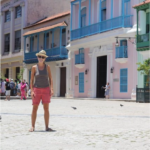
This award supported my archival research trip to Havana, Cuba during the summer of 2015. I spent time at the Archivo Nacional de la República de Cuba and the Museo Municipal de Guanabacoa. I discovered an array of primary sources relating to the U.S. occupation of the island following the Spanish-American War. These have greatly aided in the process of writing my dissertation, on genealogies of gender and race in nineteenth-century U.S. literature on Cuba.
- Joanna Beltran Giron
In the spring of 2020, I received a CLACLS fellowship to do research in Guatemala. In the summer of 2020, I was going to participate in a Maya K’iche’ language program. While in Iximulew, my plan was to conduct oral history interviews about migration and the asylum process with several Maya K’iche’ co-researchers. However, due to the COVID-19 global pandemic, my research plan for the summer drastically changed. I could no longer gather the interviews. Also, concerns about cyber surveillance made it impossible to gather sensitive information over any technological communication platform. Over the summer, I continued having critical conversations about cybersecurity in the context of doing research with immigrant communities. Presently, I am delving deeper into issues of cyber surveillance & risks and cybersecurity. Namely, as complementary to my own research with immigrant communities, I am looking at how the nation-state known as the United States of America weaponizes technology in order to repress, threaten, and traumatize immigrant communities. Specifically, I am looking at any possible strategic ways in which immigrant co-researchers can “safely” (using “safely” loosely here) share their personal narratives without putting themselves at risk of any potential escalation by the settler U.S. nation-state.
- Jorge Alvis
In summer 2019, I travelled to my home country, Colombia, thanks to a CLACLS Summer Travel Fellowships. It provided me with the resources to do archival work in Bogota, as well as to draft a paper for my second exam and to outline a presentation for an international conference. As a graduate student working in the field of critical sociolinguist, one of my current topic of interest revolves around collective writing and authorship as a social process where political struggles are disguised as debates around language. In this vein, my project focused on the writing process of the Colombian Constitution in 1991. My research draws upon a well documented cultural history in which language and conservative hegemony are deeply intertwined since the end of the XIX century in Colombia. As a result of the archival work and the time devoted to its analysis, I drafted a first version of my paper for my second exam and I also attended an international conference in São Paulo, Brazil (The IV Congreso Latinoamericano de Glotopolítica November 2-4, 2019), where I presented some of my findings.
The Covid-19 pandemic obliged me to shift to online research because I had to cancel my plan to do in person archival work in Bogota. Therefore, during the 2020 Summer, and thanks to the Summer Travel Fellowship offered by CLACLS, I focused on developing a plan for online archival research. I narrowed down the sources and data that I will use for two chapters of mydissertation based on their availability and accessibility through the internet. Furthermore, the current situation also led me to include the challenges posited by the halt of our “normal” lifestyle in my methodological framework. As I’m researching collective writing of key political texts in contemporary Colombian history, I have come across new trends of debates around the limitations and constraints of the physical archive in the context of globalized and intensively technological construction of national and transnational narratives of belonging beyond formal democracy. The pandemic also brought new light to my understanding of how digital communication has shaped political discourse and debates almost everywhere in the last decade. This reflection opened a new venue in my research to revisit taking for granted differences between oral and textual realizations of language in the public sphere.
- Joseph Torres-Gonzalez
The support I received from the CLACLS Summer Research Travel Fellowship allowed me to travel to San Juan, Puerto Rico to conduct preliminary archival research at the Puerto Rican Collection of the José M. Lázaro Library (University of Puerto Rico, Río Piedras Campus). I am currently a third-year doctoral student in Cultural Anthropology at the CUNY Graduate Center. My research focused on coffee consumption in Puerto Rico, particularly looking at transformations that the agrarian system experienced during the New Deal Era, and the creation of the “Coffee Program” under the Puerto Rico Reconstruction Administration (PRRA). I consulted the periodicals collections at the UPR, primarily focusing on the newspapers El Mundo, La Gaceta de Puerto Rico, El Nuevo Día, and The San Juan Star. The collection indexes and auxiliary descriptive guides available at the UPR Library, facilitated the opportunity to narrow down the historical time frame of my research. One of the preliminary findings of this archival research was that, thanks to one of the librarians, I was pointed to a new source that I didn’t know existed: “La PRRA según la prensa”, a compilation of all the news articles that were published during the New Deal era in Puerto Rico. This source allowed me to narrow down my identification of articles to only those that reflected on agriculture and the “Coffee program” during this historical period. This archival research at the UPR is part of a broader project that began in the Spring 2019 at the National Archives in New York City, in which I was conducting research using the documents of the Puerto Rico Reconstruction Administration (Record Group 0323) as part of the Anthropology graduate course “Latin America: Seminar on Research Methods and Sources.” The opportunity to use the resources available at the UPR allowed me to identify parallels between contemporary agricultural and commercial projects in the Island, such as government-sponsored initiatives (small businesses, and small farms), which connects to my current dissertation project on coffee culture in Puerto Rico.
During the Summer of 2020, the COVID-19 Pandemic changed everything–including our projects, well-being, and the type of work that we do as student researchers. With the generous award from the 2020 Research Travel Fellowship from the Center for Latin American, Caribbean, and Latino Studies, I was able to stay inNew York City (and partially subsidize my rent) during the pandemic and recalibrated certain sections of my project. My plans changed, since I couldn’t continue my pre-fieldwork research in person, which included participating in the scheduled training program at the Escuela de Café y Baristas de Puerto Rico. This barista training program would have allowed me to familiarize myself and gain rapport with one of the community sectors of this food industry in Puerto Rico. Having stated the limitations and last-moment changes in my research calendar, I participated in virtual sessions of the barista training program, along with continuing archival research with sources available in remote databases, along with refining sections of my dissertation research proposal, including preparations for my Second Doctoral Exam. Some of the aspects that I am rethinking of my research, particularly in the methodological aspect, is the integration of digital approaches, such as: social media analysis, remote interviews, and further exploration of archival resources that are available digitally.
- Joshua Katz-Rosene
“I traveled to Bogotá, Colombia in July to continue my dissertation research on Colombian canción social (social song). During this fieldwork trip, I did archival and bibliographic research at libraries, interviewed musicians, and documented performances.”
- Juan Corredor Garcia
Reportage fellow 2024
- Juan Enrique Dolores Cerna
LDP fellow 2024
- Julio Arias Vanegas
Thanks in part to the CLACLS summer travel fellowship in 2015, I traveled to Colombia to conduct preliminary fieldwork towards my dissertation, which examines the intertwined processes of state formation and agribusiness expansion in the Colombian-Venezuelan Llanos. In particular, I analyze different disputes over the conception, use and property of state lands (from baldíos to specific state-owned landholdings). Hence, during that summer I focused on exploring public debates over the making and allocation of specific state-owned lands from 2005 to 2015. I spent three months between the cities of Bogotá, Villavicencio, and Puerto Gaitán, where I was able to gather data coming mainly from regional and local newspapers to state institutions’ and NGOs’ archives.
- Justin Bracken
Over the course of two months in the late summer of 2015, I managed a project of archaeological mapping and excavation at the site of Muralla de León, a fortified Maya site along the shore of Lake Macanché in the Petén department of northern Guatemala. The CLACLS Fellowship funded my flights down and back, as well as my travels within the country during the course of the project. First, the survey and mapping portion of the investigation located and documented previously unknown water channeling features, while also capturing in detail the form of the fortifying rampart wall that encircles the site. Secondly, the excavations explored the construction history and techniques of that same rampart, giving insight into its age and how it was used. This information was presented at the 2016 Society for American Archaeology (SAA) conference, and provides the basis for grant applications that will fund the third and final phase this fieldwork.
Later in 2019, the CLACLS Summer Travel Fellowship allowed me to attend and present my research at the Simposio de Investigaciones Arqueológicas en Guatemala, which took place at the National Museum of Archaeology and Ethnology in Guatemala City this July. The Simposio is a major opportunity to connect and share research with the Spanish-speaking archaeological community that works in and around Guatemala, primarily focused on the Maya world. As I have been progressing in my dissertation work, especially the fieldwork at my site in northern Guatemala, it had been set in my mind as a milestone to present my findings at this conference and discuss them with other researchers and interested parties. The paper I presented was a success, opening my research to numerous other scholars and sparking discussion on the dynamics of Maya warfare and the development of complexity. The work I’ve done indicates that defensibility was likely a more central concern in the time of increasing complexity in the Maya world, providing insight into the broader processes taking place at that time. Attending this conference allowed me to make connections with other researchers doing similar work, setting up future collaboration and debate. Further, my time in the museum allowed me to explore the collection and consult with materials, especially weaponry and carvings on stelae, directly implicated in my study of early Maya defensibility and warfare.
- Justo Planas Cabreja
How does Latin American literature dialogue with the Latin American medical theory of its time? How do these physicians and writers get involved in the political destinies of their respective countries? Although some studies of this nature have been done on Argentina, there are no comprehensive studies unraveling the way in which physicians understand the body and their relationship with patients in the late 19th and early 20th in light of the interplay of politics and society during this time. During the 2018 summer vacation, I want to examine, among others, the archives of the Buenos Aires National Academy of Medicine. The Library of the Academy of Medicine has texts from 1489 to the present. For example, I intend to review the medical literature written by Dr. Cecilia Grierson, the first woman to receive a Medical Degree in Argentina. She was also a feminist like the important Modernist Argentinian poet Alfonsina Storni. Although they both have explained the existence in the female body, I have found no study comparing their work. The same can be said about Leopoldo Lugones and Dr. Bernardo Houssay, Nobel Prize Laureates in Medicine. Access to this archive will open the path to the study I pursue, which will also include writers and physicians from two other countries: Uruguay and Cuba.
- Kelsey Chatlosh
Kelsey Chatlosh is a cultural anthropology PhD student and Digital Fellow at the Graduate Center of the City University of New York (CUNY). Her future dissertation research in northern Chile, supported by a Fulbright IIE research grant, will investigate Afro-Chilean women activists’ articulations of belonging to the African diaspora and the Chilean nation as a site of knowledge production in relation to Chile’s racial formation and patriarchal system, and temporal configurations of colonial and national expansionist pasts and post- or de-colonial presents and futures. Her work as a Digital Fellow is focused on digital tools and platforms for qualitative research and oral interviews, with an emphasis on ethics and feminist methods.
- Krystina Francois
Reportage fellow 2024
- Kyong Mazzaro
I am broadly interested in understanding patterns of violence in democracies. In my dissertation, I focus on instances of restrictions on media freedom in Latin America. In many democracies, it is not uncommon to see cases where activists, journalists, or media outlets are targeted by state or non-state actors who want to impede the dissemination of information. However, we do not know much about why these restrictions are prevalent at certain times and locations and not at others. I want to understand under what conditions actors in democracies are more likely to go after their opponents in the media.
- Laura Carter
“This summer, beginning June 4, 2013 I travelled to Paris, France and to Guadeloupe, French West Indies to conduct preliminary research for the long-term dissertation fieldwork that I will undertake next year. This summer’s research was crucial for the larger thesis project, Embodied & Inscribed—Gwoka : Guadeloupan Social Movement & Immaterial Heritage of France. These two months were essential for establishing the necessary contacts, initiating ongoing and future collaborations, beginning archival research, as well as giving me a much fuller sense of the intellectual, cultural and political terrain within which I will be engaging in the coming year(s).”
- Laura Liendo
Thanks to the CLACLS Summer Travel Fellowship in 2019 I visited Mexico City to do archival research in the Hemeroteca Nacional de México (The National Newspaper Archive of Mexico). This summer’s research gave me the opportunity to have a broader approach to Nineteenth Century Magazines created by women writers. Due to the direct access to these magazines I was able to have a better understanding of the topics and dynamics on Nineteenth Century (Latin American) Literature in general, and of female authorship and media in particular. Being at the archive reviewing, comparing and contrasting all this material has helped me circumscribe the reach of my research question. Last but not least, the fellowship also allowed to met and discuss my inquiries with scholars from The National Autonomous University of México.
- Liliana Quiroa-Crowell
With the support of the CLACLS Summer Travel Fellowship, I visited the northern Alta/Baja Verapaz region of Guatemala. While my larger doctoral research is based in the eastern Caribbean coastal city of Puerto Barrios and the surrounding Q’eqchi’ Maya communities, this trip was key for my doctoral project as this area is the territory historically narrated as the origin of the Q’eqchi’. The goal of this visit was to better understand these north-east internal migratory patterns, specifically how this movement maps onto the banana industry of Puerto Barrios. Traditional accounts of the Caribbean banana industry largely excludes the participation of the Maya and during this trip I wanted to understand: 1) if, when and/or how the Q’eqchi’ of Alta/Baja Verapaz are connected to the east, and 2) how they talk about the coastal Q’eqchi’ in relationship to their communities. Specifically, I spent two weeks residing in urban center San Pedro Carchá and visiting the nearby cities of Cobán and San Juan Chamelco. From these larger cities, I made daily trips to more rural Q’eqchi’ communities, including Chisec, Chaimal, and Tactic. The relationships and conversations from this trip advanced by broader research first, by strengthening my basic Q’eqchi’ skills, as many individuals in these communities are monolingual Maya speakers. Secondly, I also accessed several non-inventoried archives, including the Coban municipal library/archives and Centro Ak’kutan, from which I gathered key historical information. Finally, this trip allowed me to make build critical networks with Q’eqchi’ leaders and organizations, including the Mennonite Central Committee (MCC), Women in Agroecology Leadership for Conservation (WALC), and ‘Union Femenil’ of the Q’eqchi’ Mennonite Church. These relationships led to personal invitations to small meetings and households where I observed the inner workings of local women-led groups and converse one-onone regarding migration. For example, several community members offered tours of their farmsteads where, surprisingly, many grew bananas despite the non-tropical climate. After pointing them out, they mentioned their eastern migration to work on banana plantations. This preliminary finding, as well the evident familiarity of this community with Caribbean Q’eqchi’ (ex. sending their greetings to their ‘brothers and sisters’ on the coast) confirmed this linkage as important, despite its absent from mainstream literature. Furthermore, many Q’eqchi’ leaders mentioned sending community mission teams to the ‘difficult populations’ of the Caribbean, drawing a stark line of difference between the north and the east, despite the previous use of close kinship terms. This experience puts me in a good position for my broader research project, as it expands my network beyond just my specific field site. Having knowledge of the Alta/Baja Verapaz region, knowing specific people there, and bringing messages from these communities back to my field site also opened new doors in Puerto Barrios. After this trip, I briefly passed through Puerto Barrios before returning to New York and found that mentioning my new familiarity with the north led to very productive conversations with the Q’eqchi’ community members, who were excited to share family ties and the important landmarks they remembered from the North. Finally, this experience provided me a basis to compare Q’eqchi’ women organizing strategies, giving me better sense of where to look and how to talk this topic in my field site.
- Liz Donato
During my CLACLS Summer Travel Fellowship in 2014, I traveled to Valparaíso, Chile to conduct dissertation research on the radical, interdisciplinary pedagogy of the Escuela de Arquitectura de Valparaíso (f. 1952—), which is based on the encuentro between architecture and poetry. My dissertation, “An Intimate Modernism: The Valparaíso School in the Urban Sphere, 1952-1972” focuses on how certain surrealist-inspired concepts manifest in the School’s theories and activities (poetic acts, urban drifting, the notion of interiority) subverted the technocratic rationalism and developmentalist ethos typical of official state architecture in postwar South America. I spent the majority of my trip revising materials in the Archivo Histórico José Vial Armstrong and in-house publications and theses in the School’s library related to the origins of the School. I also had the opportunity to visit the School’s experimental research site, Ciudad Abierta (f. 1970—) where students and faculty regularly convene every Wednesday. During this summer’s archival research, I also became interested in how the School attempted to establish a vanguard culture in postwar Chile by staging public exhibitions of international contemporary art, as well as retrospective exhibitions of their own activities and production. I am currently using these findings to write a collaborative article related to interdisciplinary pedagogies and modernism in postwar Latin America.
- Luis Bernardo Quesada
My doctoral research focuses on etiquette and politeness manuals that circulated in Mexico during the 19th- and early-20th centuries, and examines how representations of language and language use are aligned with broader social and economic processes. The 2018 CLACLS Travel Fellowship will allow me to travel to Mexico City to continue gathering and analysing these and other archival materials as part of the research process.
My original project aimed to conduct archival research at some institutions located in Morelia, Mexico. In a direct way, the suspension of activities due to the pandemic affected greatly my project for the libraries and institutions that I had planned visiting and which are now indefinitely closed. Indirectly, the consequences of the pandemic have had other significant effects in this project, but also in my overall research agenda, teaching, writing, and everyday life activities, ultimately affecting the present and many other short-term plans. This has pushed me to not just simply postpone the archival consultations that I expected to carry out during the Summer of 2020 for the project I submitted to CLACLS, but also to redesign this research project by means of proceeding to analyze first other digital materials that are available and that are also important to consider, even when they are not part of my primary objects of study. It has also taken me to re-think the project in many ways and to therefore explore other avenues of analysis.
- Marc Wolf
My work focuses on the spatial proclivities of ancient Maya society. Research primarily concentrates on the Late Classic (AD 700) Maya archaeological site of Cancuen in Guatemala’s Verapaz region of interface between the Central American volcanic highlands and the lush tropics of the Guatemalan Peten rainforest. Necessarily I use references from farther afield settlement within greater Mesoamerica to frame my thinking. Thanks in part to a CLACLS Summer Research, I was able to better define my project area within Cancuen and thus more rigorously compare the local settlement signature to others across prehistoric Latin America. The CLACLS fellowship has helped me illuminate this ethos of cosmopolitan social dynamism by allowing me to conduct field work that helped establish the background to my studies.
- Marco Castillo
The CLACLS Travel Fellowship allowed me to cover transportation to and from Asuncion, Paraguay to carry out data recollection and exploratory research during the summer months of 2019. I could retrieve databases related to demographic indicators, census databases, and of carceral population. I additionally carried out exploratory archival research at the Paraguayan Supreme Court’s Human Rights Museum and Documentation Center, informally known as the “Archivos del Terror”. All sources that I could access are public and private collections that are either not available or only partially available online. My research looks at the dynamics and consequences of transitional politics in the Southern Cone. I seeks to understand processes of authoritarian governmentality in post-dictatorship settings, violence against minorities, and political resistance in Latin America. I am specifically interested in studying how the processes of transition evolved in terms of repression against minorities, evolution of rights, citizenship, and inequality. Using Paraguay as a case study allows to understand disruptions and continuities of dictatorships in Latin America. As a country that significantly preceded other military regimes of the region, its history is relevant but surprisingly little known in the scholarship of transitional regimes and their consequences.
- Margarita Aguilar
“I was a recipient of the CLACLS summer travel fellowship, 2013 to conduct research towards my dissertation on the Nuyorican artist, Adál Maldonado, (tentative working title–Traditions and Transformations in the Work of Adál: Surrealism, El Sainete, and Spanglish). Adál (born Adál Alberto Maldonado in Utuado, Puerto Rico, 1948) is a contemporary multimedia artist whose work resists easy categorization. Though his work is rooted in the medium of photography, it is also performative, informed by eighteenth- and nineteenth-century Puerto Rican literary and theater traditions such as the sainete, a popular theatrical form imported from Spain to Puerto Rico, which employed the language of the common man and its typical subject matter of the comical distortionofreality. His artistic practices include photography, performance, installation, video, music, sculpture, and film. My dissertation will argue that Adál was the first visual artist within the Nuyorican movement to incorporate text with image to express a Nuyorican identity using Spanglish, a hybrid language that employs both Spanish and English. Adál alone among visual artists in his circle has expressed the Nuyorican identity throughout his body of work through the use of the written and spoken word. In his multidisciplinary production, Adál has developed and consistently made use of language as a means to inform and complete his images so that they function as both visual and spoken works of art. The artist considers his fotonovelas and self-portraits to have performative and film qualities.”
- Mary Brown
“The most valuable element of my experience in Peru was stumbling upon a new methodology that has both streamlined and redirected my dissertation research. My dissertation concerns avian imagery in the art of an ancient Peruvian culture (Paracas, 900-200 BCE). My experience with the landscape and birdlife of Paracas, in person, raised questions about the intersection between geography, natural history, and the evolution of human culture. Upon resuming library research in New York, I discovered the methodological approach of evolutionary psychology, which addresses these questions in depth. This approach provides more insight and dimension to my work; I am now exploring a biologically-based affinity for birds as an element of evolved human nature. I credit the visit to Peru, made possible in part with the CLACLS Summer Research Travel Grant, for providing the necessary insights to progress in my research.”
- Miryam de Jesus Nacimento Beltran

My research analyzes the production and circulation of information about illicit coca in the context of Colombia’s War on Drugs. Originally, I was going to conduct preliminary fieldwork in this country last summer. However, due to travel restrictions I had to stay in New York. CLACLS funding has allowed me to explore ways to continue with my research while not being physically on my research site. Specifically, I have incorporated archival methods into my project and identified open access sources, digitized archives, and secondary literature that are relevant for achieving my research objectives. In addition, I have learned techniques for media monitoring and analysis.This has permitted me to stay up to date with all the developments related with my research topic, and even find unexpected connections between the pandemic emergency and the War on Drugs. Thus, although my plans have been severely affected, I still have been able to make progress with my project, by reorienting my goals, methods, and frameworks adapting them to the current research conditions.

