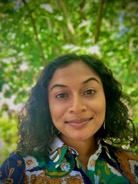
The CLACLS fellowship allowed me to dedicate time to reconceptualizing my research to adapt to the new virtual reality. It also provided the space to engage my work in the current conversations, fueled by the Black Lives Matters Movement, to address systemic racism and anti-blackness. I had initially planned to attend the Carribean Studies Association in Guyana, my parents’ home country, and present in my first academic panel. I would have showcased my research which examines how the Indo-Caribbean second-generation advocates and reconstructs their racial identity using community initiatives. I also planned to visit the National Archives to gather primary documentation on racial divisions between Afro-Guyanese and Indo-Guyanese under British colonialism. Of course, all of these plans changed due to the global pandemic, which heavily affected my family and my Guyanese community in Queens. In the midst of this and the uprisings that occurred, I dedicated my summer to thinking about how anti-blackness pervades this community and other immigrant communities. I wrote two reflective pieces on Medium, participated in workshops in the community and engaged with social media platforms in discussions on anti-blackness, race and identity. To meet the new requirements of submitting a Qualifying Paper as a second-year PhD student in Sociology, I will soon begin to conduct interviews examining intergenerational perspectives on race and anti-blackness in the Indo-Caribbean community.