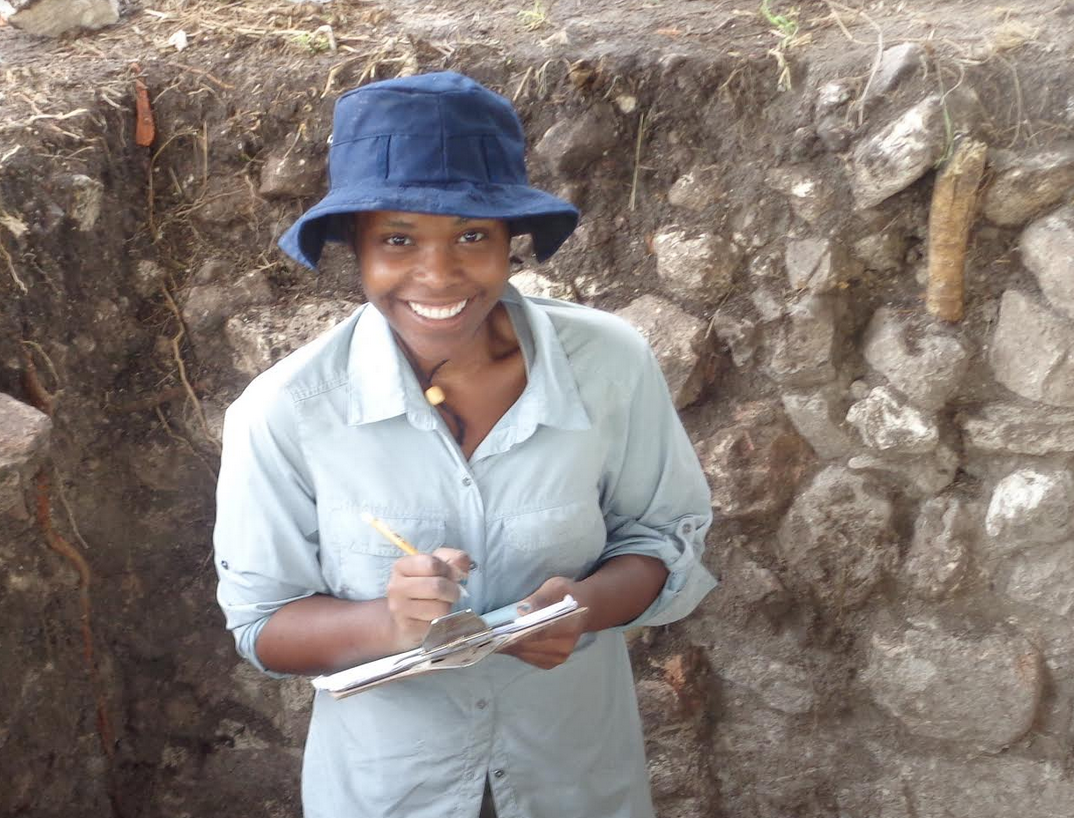
This summer, I will be traveling to the Smithsonian Tropical Institute in Panama City, Panama to analyze my faunal collection from Guatemala. The proposed study will investigate social differentiation at Nixtun-Ch’ich’ through the examination of animal bones from household and ceremonial buildings. I seek to analyze a collection of excavated bones from various structures throughout the site, at the Smithsonian Institute’s archaeological laboratories working with Dr. Ashley Sharpe and Dr. Richard Cooke. Mammal remains will be assessed using archaeological bone counts (MNI+NISP), weighed, sexed and aged. Associated contextual material (excavated artifacts) may further assist in providing evidence of social inequality from the Middle Preclassic-Late Preclassic transition period (400 BC-AD 200). This analysis is significant because higher and lower status residents would have had differential access to natural resources (animals) resulting in unequal distributions of those products. Thus, daily activities of the inhabitants such as animal consumption would have reflected socio-economic differences. The amount, size, and types of animals consumed by residents belonging to hierarchically differentiated social systems would have been distinct. The privileged elite would have been able to afford choice cuts of meat and a diverse variety of animals while the non-elite settled for common species and smaller proportions of butchered meat. Therefore, my analysis may help to give insights into social inequality and how it was inscribed within an ancient city through diet