
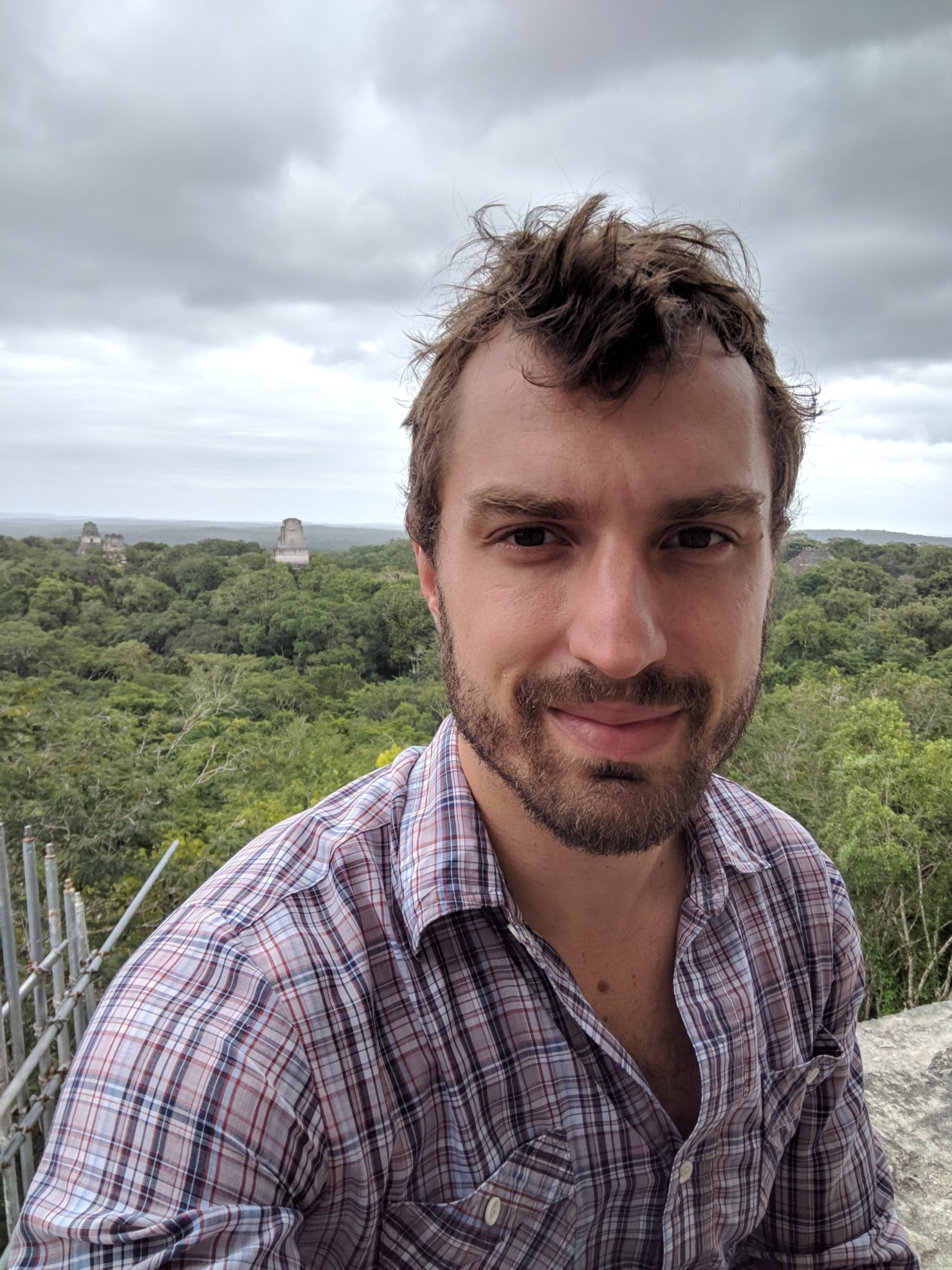
Over the course of two months in the late summer of 2015, I managed a project of archaeological mapping and excavation at the site of Muralla de León, a fortified Maya site along the shore of Lake Macanché in the Petén department of northern Guatemala. The CLACLS Fellowship funded my flights down and back, as well as my travels within the country during the course of the project. First, the survey and mapping portion of the investigation located and documented previously unknown water channeling features, while also capturing in detail the form of the fortifying rampart wall that encircles the site. Secondly, the excavations explored the construction history and techniques of that same rampart, giving insight into its age and how it was used. This information was presented at the 2016 Society for American Archaeology (SAA) conference, and provides the basis for grant applications that will fund the third and final phase this fieldwork.
Later in 2019, the CLACLS Summer Travel Fellowship allowed me to attend and present my research at the Simposio de Investigaciones Arqueológicas en Guatemala, which took place at the National Museum of Archaeology and Ethnology in Guatemala City this July. The Simposio is a major opportunity to connect and share research with the Spanish-speaking archaeological community that works in and around Guatemala, primarily focused on the Maya world. As I have been progressing in my dissertation work, especially the fieldwork at my site in northern Guatemala, it had been set in my mind as a milestone to present my findings at this conference and discuss them with other researchers and interested parties. The paper I presented was a success, opening my research to numerous other scholars and sparking discussion on the dynamics of Maya warfare and the development of complexity. The work I’ve done indicates that defensibility was likely a more central concern in the time of increasing complexity in the Maya world, providing insight into the broader processes taking place at that time. Attending this conference allowed me to make connections with other researchers doing similar work, setting up future collaboration and debate. Further, my time in the museum allowed me to explore the collection and consult with materials, especially weaponry and carvings on stelae, directly implicated in my study of early Maya defensibility and warfare.

