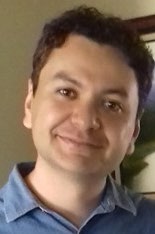
The CLACLS funding allowed me to travel to Maya indigenous communities in the northern highlands of Guatemala. There, I did fieldwork among people who experienced the war between the years 1969 and 1986. Together with a group of survivors we went to the hamlets and mounts where many resisted and fought during and after the Guatemalan state repression in 1982. I found that there are several kinds of memories from people who experienced and struggle during those years. Many of these testimonies give a more complex perspective than the truth commission’s view on the war. For instance, the memory of local people also remembers their struggles against the Guatemalan army, giving a much deeper understanding of why so many people decided to form the Communities of Population in Resistance (CPR) between 1982 and 1996. This research experience helped me to go to the places of memory, to walk and share with Maya indigenous their view about several important historical events.
Originally, I planned to do research in Mexico and Guatemala in those two months. Because of the global pandemic, this was not possible. I then focus on two main goals during these harsh times. First, I work on an ethnographic article with the purpose of submitting it to a journal. I managed to read it again, identify orthographic errors, and rewrite certain parts. The essay delved into how Maya-Kaqchikel communities experienced theCivil War in the Guatemalan central highlands, between 1976 and 1982. Second, I started working on my bibliographical lists for my Second Exam in Anthropology. With these two goals I managed to work despite the difficulties of quarantine and confinement. My research methods surely will change in the sense of working on the interviews I already have with people from the department of Quiché, in Guatemala.In this sense, I will focus on discourse analysis, historical reconstruction, and contrasting memories to start writing my proposal for my dissertation. I want to thank the CLACLS team for supporting my research work during the Covid-19 pandemic in 2020.

