
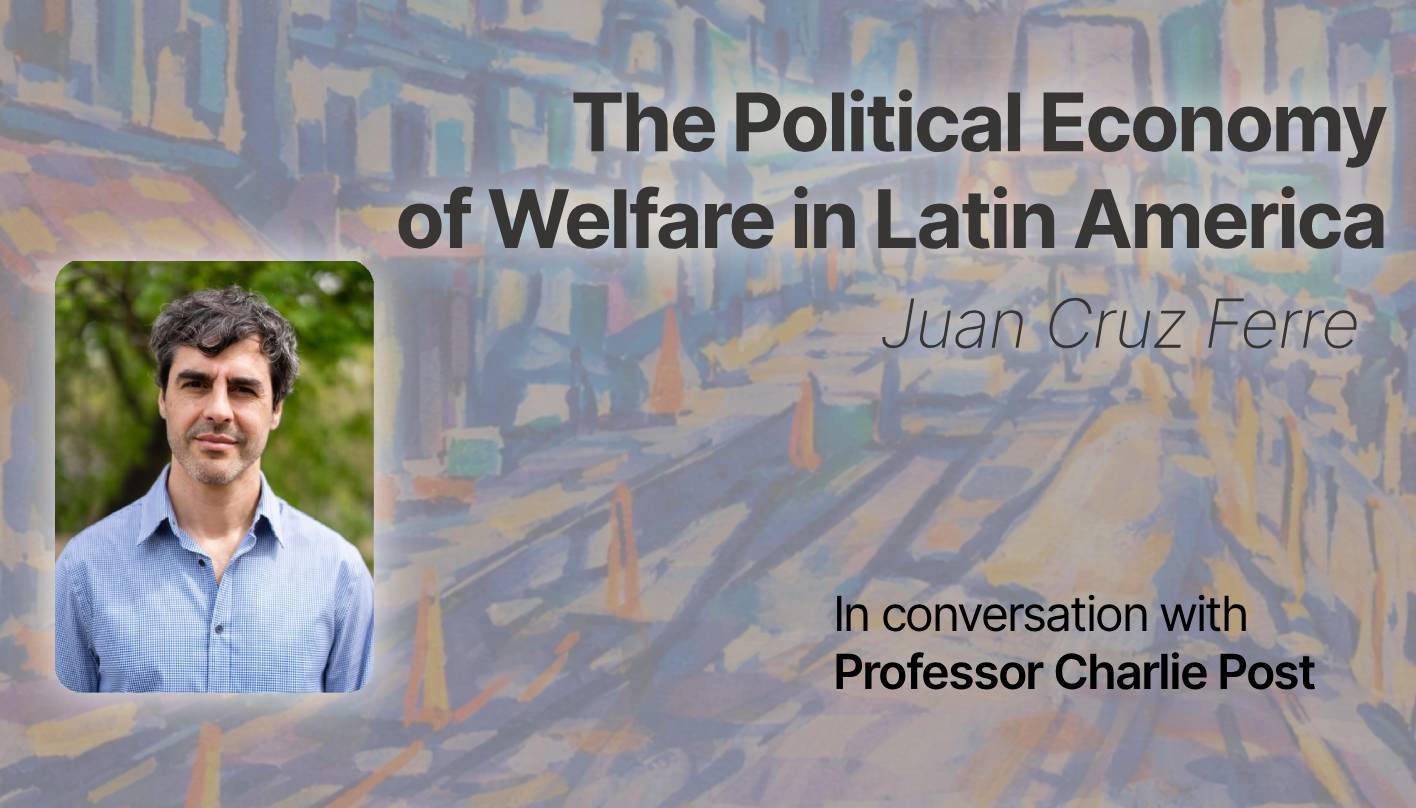
APRIL 24, 2026 3:00 PM | SOCIOLOGY LOUNGE
GRADUATE CENTER, CUNY – 365 FIFTH AVE. NEW YORK NY 10016
This innovative book analyses the hurdles preventing Latin American governments from implementing universalist welfare regimes. Juan Cruz Ferre presents a unique quantitative analysis of the persistent inequalities in welfare policy across this region including a three-dimensional diachronic assessment spanning inclusion, generosity, and equity.
RSVP: The Political Economy of Welfare
In The Political Economy of Welfare in Latin America, Ferre uses mixed methods to explore how, despite progress in other areas, equity in welfare has deteriorated across Latin America over the 21st century. Chapters feature comparative historical analysis of health and pension reforms in Argentina, Uruguay, and Chile, highlighting crises of legitimacy and the relation of forces between classes as key factors influencing progressive structural reforms. Ferre proposes a neo-Marxist theoretical framework that integrates state theory, class struggle, and the influence of business power, offering an innovative critical perspective on the key determinants of social policy change.
This is an essential resource for students and academics in sociology, political science, public policy, economics, and Latin American studies. It is also an enlightening read for practitioners, policymakers, and advocates seeking to understand the dynamics of social policy reform in middle-income countries.

